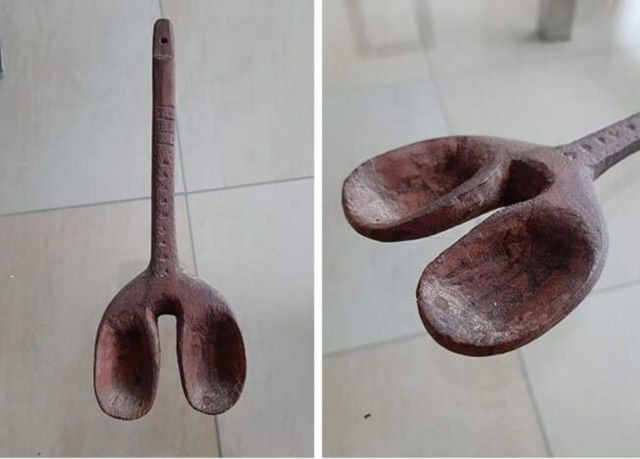
What the heck is this spoon?

big balls spoon

Meet the marvel of modern dining innovation: the spoon with two bowls, or as some affectionately call it, the “spoonoon.” This quirky utensil is like the Swiss Army knife of spoons, designed for those who believe that one bowl simply isn’t enough. Imagine sitting at breakfast with a spoon that can handle your cereal and your yogurt simultaneously. No more cross-contaminating flavors or awkwardly switching utensils mid-bite. The spoonoon is here to revolutionize your mealtime efficiency, albeit with a side of bewildered stares from your dining companions.

The hilarity truly unfolds when you try to explain the spoonoon to others. “Why, yes, it’s a spoon with two bowls. One for soup and one for dessert, all in one go!” you proclaim, as your friends try to grasp the logic. The looks of confusion quickly turn to laughter as they envision the delicate balancing act of slurping hot soup while delicately savoring a scoop of ice cream from the same utensil. The spoonoon is less about practicality and more about embracing the absurdity of culinary innovation, making every meal a delightful circus act. So, go ahead, embrace the chaos, and let the spoonoon bring double the fun to your dining table!

So we are told it’s a African double spoon used in ceremonies. Like the Dan Wakémia double spoon, also called Yacouba. Who knew?

Share

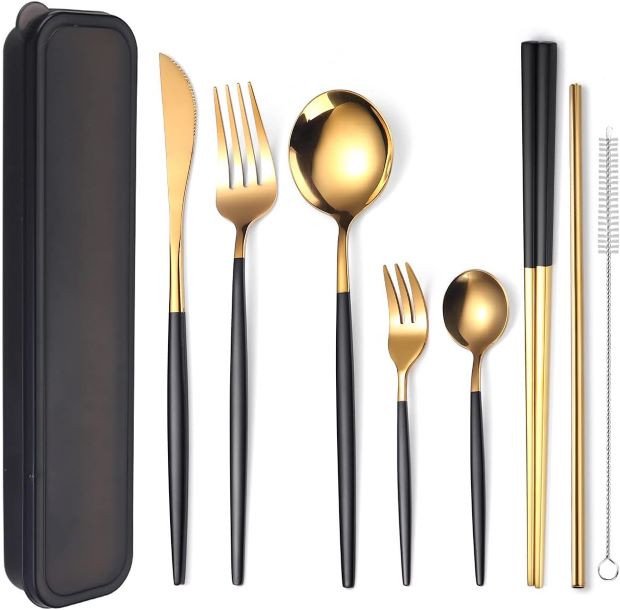
AARAINBOW Portable Reusable Cutlery Set 

AARAINBOW 8 Pieces Stainless Steel Flatware Set Portable Reusable Cutlery Set

Forget “bring your own bottle” parties—now it’s all about the “bring your own cutlery” shindigs! Imagine arriving at a backyard barbecue, not with a bottle of wine in hand, but with your personal stash of forks, knives, and spoons. Your best friend proudly shows off their gold-plated set, while your aunt flaunts her vintage silverware with intricate floral designs. It’s like a cutlery fashion show where everyone is a winner, and suddenly, your quirky plastic spork collection seems like a genius conversation starter. Who knew that BYOC could turn a simple gathering into a parade of utensil pride?

But the real fun begins when dinner is served, and everyone whips out their trusty tools. There’s the inevitable debate over whose fork is the sharpest, whose spoon holds the most soup, and whether anyone’s brought an obscure utensil like a grapefruit knife or an oyster fork. The host, meanwhile, breathes a sigh of relief, knowing they won’t be washing a mountain of mismatched flatware later. And as everyone digs into their meals, sharing laughs and comparing cutlery quirks, it’s clear that “bring your own cutlery” isn’t just a practical idea—it’s a recipe for a memorable and hilariously unique dining experience.

The AARAINBOW 8 Pieces Stainless Steel Flatware Set Portable Reusable Cutlery Set Travel Utensils Set Including Chopsticks Knife Fork Spoon Straws Cleaning Brush Dishwasher Safe (Black Golden) is a really long title that is pretty much the description for this Bring Your Own Cutlery (BYOC) set. Made of dishwasher safe stainless steel this 8-piece set consists of a dinner knife, dinner fork, dinner spoon, soup spoon, pair of chopsticks, bent straw, straight straw, straw brush, plus a carrying case.

Get the from AARAINBOW Portable Reusable Cutlery Set from Amazon

Share

How To fix Damaged Cutlery. Repair the spoon!

The wonderful folks at TheRepairShop have posted this quick little video on how to repair your silverware. We wouldn’t recommend these techniques for regular old stainless steel cutlery as your fork will probably break, the spoon might be able to handle it. Now you know how to fix your fork without scratching it!

Share

Threek – The Three Tined Fork

Threek Forks

My defense of the three tined fork being called a “Threek”:

In the realm of culinary terminology, the classification of utensils holds particular significance in both historical and contemporary contexts. Within this domain, the discourse surrounding the designation of three-tined forks has garnered notable attention, particularly concerning the nomenclature utilized to denote such implements. Contrary to popular belief and colloquial usage, the term “threeks” has emerged as the more precise and linguistically accurate designation for these utensils, rather than the commonly employed “tridents.” This linguistic precision is derived from etymological considerations, wherein the term “trident” traditionally denotes a three-pronged implement of a distinctly different nature, typically associated with maritime or mythological connotations, thus diverging from the utilitarian function of the culinary utensil in question.

Moreover, the adoption of the term “threeks” serves to reinforce clarity and precision within the discourse of culinary arts and household utensils, aligning with the broader pursuit of linguistic accuracy and categorical precision. The linguistic distinction between “threeks” and “tridents” not only aids in the avoidance of semantic confusion but also contributes to the preservation of historical and cultural accuracy within the realm of culinary discourse. Through the scholarly delineation of terminology, practitioners and enthusiasts alike may engage with a heightened level of linguistic specificity, thereby facilitating clearer communication and fostering a deeper appreciation for the nuances inherent within culinary traditions and practices.

Buy this 12 piece set of Square Handle Dinner Forks from Amazon

Share